
Short answer: A useful home reading comes from a repeatable routine: rest first, sit with the back supported, keep the arm supported at heart level, place the upper-arm cuff correctly and avoid talking or moving during the measurement. The J761 combines an upper-arm cuff, display and Start/Stop control. Follow NHS guidance for technique and discuss repeated concerns with a healthcare professional. A single home result is not a diagnosis, and symptoms should not be dismissed because the monitor shows a reassuring number. J761 upper-arm electronic blood-pressure monitor is the documented product used for this comparison.
Prepare the person and position before pressing Start
A useful home reading comes from a repeatable routine: rest first, sit with the back supported, keep the arm supported at heart level, place the upper-arm cuff correctly and avoid talking or moving during the measurement. The J761 combines an upper-arm cuff, display and Start/Stop control. Follow NHS guidance for technique and discuss repeated concerns with a healthcare professional. A single home result is not a diagnosis, and symptoms should not be dismissed because the monitor shows a reassuring number. A useful home reading comes from a repeatable routine: rest first, sit with the back supported, keep the arm supported at heart level, place the upper-arm cuff correctly and avoid talking or moving during the measurement. The J761 combines an upper-arm cuff, display and Start/Stop control. Follow NHS guidance for technique and discuss repeated concerns with a healthcare professional. A single home result is not a diagnosis, and symptoms should not be dismissed because the monitor shows a reassuring number.
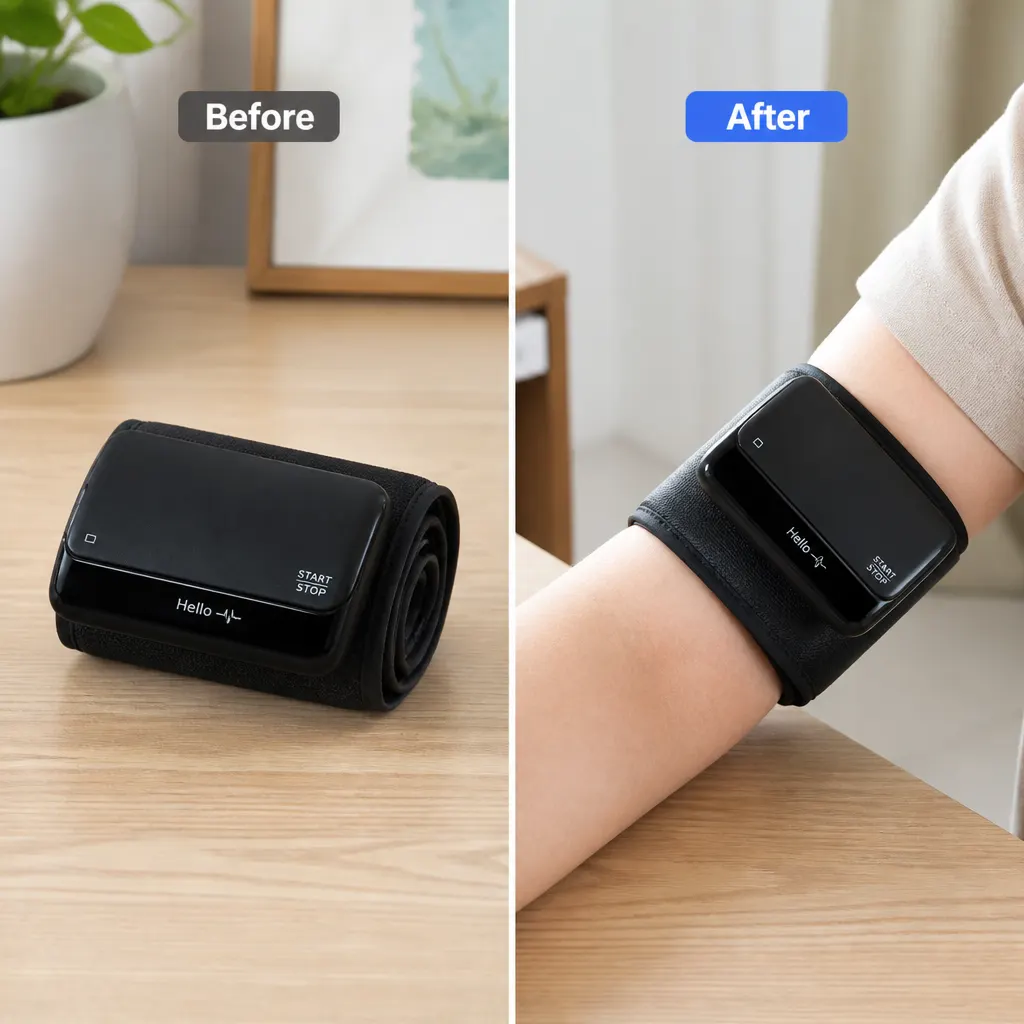
Use the upper arm consistently
| Technique | Check |
|---|---|
| Rest | Sit quietly before measuring |
| Posture | Back supported, feet on the floor |
| Arm | Supported and cuff positioned as directed |
| During reading | Stay still and do not talk |
Record the result and context
- Read the NHS instructions first.
- Sit calmly and position the cuff on the upper arm.
- Start the reading and remain still.
- Record the result and contact a healthcare professional when concerned.
Seek clinical help for symptoms or concern
The J761 product facts do not specify clinical validation, cuff range, diagnostic interpretation or treatment thresholds. Do not alter medicine from a home reading alone.
Make technique repeatable, then discuss the pattern
Use the J761 for home readings only within the NHS-style technique and professional interpretation boundary. For related context, see Tubeless Upper-Arm BP Monitor: UK Format and Safety Guide. For related context, see Upper-Arm Blood Pressure Monitor Without a Tube: UK Buyer Checks. The documented next step is the J761 upper-arm electronic blood-pressure monitor.
Sources and safety context
Home readings are useful records to discuss with a clinician; they are not a diagnosis. NHS: Blood pressure test.
Use the product page as the final check for the documented model, included items and stated limits before ordering.
Take a grounded next step before the first reading
Before buying, make a short list of what must be confirmed: upper-arm format, compatible cuff size, access to full model directions and any status required by your healthcare professional. The first item is documented for the J761; the cuff range and any independent validation status are not included in the available facts. Also decide whether a manual notebook or phone note will work for you if device memory is absent or unconfirmed. This prevents a convenient all-in-one design from distracting you from the checks that determine whether it suits the job.
If those checks are satisfied, set up the compact monitor at your chosen kitchen-table station and practise the physical sequence using the supplied directions before beginning a formal record. Keep the method and recording format consistent with the plan you have been given. The J761’s integrated cuff, on-cuff display, single Start/Stop control and lack of a separate tube can make the equipment side straightforward, but questions about individual results or changes to your monitoring plan belong with an appropriate healthcare professional.