
Short answer: A blood-pressure diary is most useful when it turns repeated home readings into a clear record a GP can discuss. Use a consistent technique and write down the date, time, reading and any relevant context, such as whether you had just exercised or felt unwell. The J761 provides an upper-arm display for taking readings, but the monitor does not decide what the pattern means. NHS guidance and your healthcare professional should determine the next step. J761 upper-arm electronic blood-pressure monitor is the documented product used for this comparison.
Consistency makes a diary easier to interpret
A blood-pressure diary is most useful when it turns repeated home readings into a clear record a GP can discuss. Use a consistent technique and write down the date, time, reading and any relevant context, such as whether you had just exercised or felt unwell. The J761 provides an upper-arm display for taking readings, but the monitor does not decide what the pattern means. NHS guidance and your healthcare professional should determine the next step. A blood-pressure diary is most useful when it turns repeated home readings into a clear record a GP can discuss. Use a consistent technique and write down the date, time, reading and any relevant context, such as whether you had just exercised or felt unwell. The J761 provides an upper-arm display for taking readings, but the monitor does not decide what the pattern means. NHS guidance and your healthcare professional should determine the next step.
Record context without inventing a diagnosis
| Diary field | Example record |
|---|---|
| Date/time | 2026-09-04, 08:00 |
| Reading | Systolic/diastolic and pulse as displayed |
| Context | Rested, stressed, unwell or recently active |
| Action | Question to discuss with the GP |
Bring the actual pattern to the GP
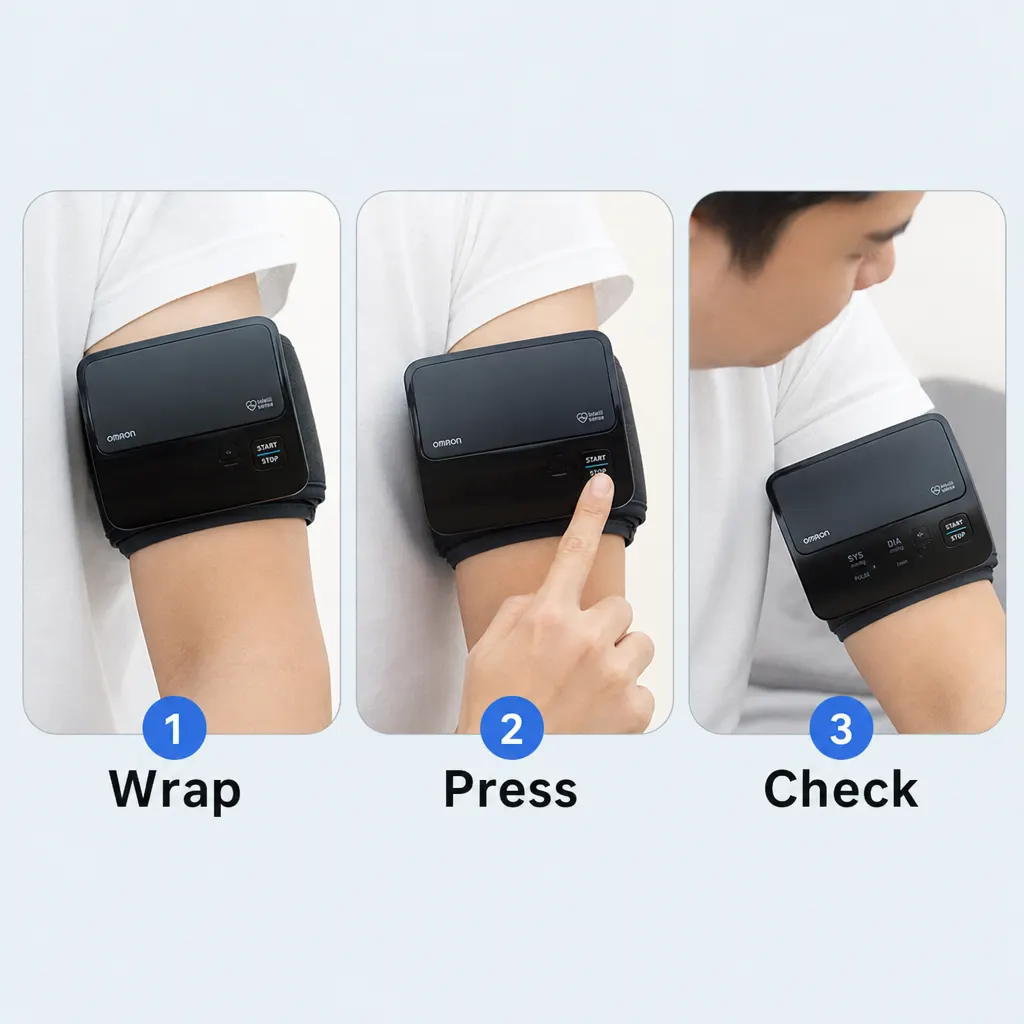
- Prepare the monitor and sit as advised.
- Take the reading consistently.
- Write the date, time and displayed values.
- Add symptoms or unusual context and share the record with the GP.
Symptoms can matter even when a number looks normal
The monitor listing does not provide diagnostic thresholds, medication advice, clinical validation, a required diary schedule or an interpretation of your personal readings.
Make the diary useful to the clinician
The J761 can support a dated home record, while the GP or other healthcare professional interprets what the pattern means. For related context, see Home Blood Pressure Monitoring Morning and Evening: UK Record Guide. For related context, see How to Take Blood Pressure at Home with an Upper-Arm Monitor. The documented next step is the J761 upper-arm electronic blood-pressure monitor.
Sources and safety context
Home readings are useful records to discuss with a clinician; they are not a diagnosis. NHS: Blood pressure test.
Use the product page as the final check for the documented model, included items and stated limits before ordering.
Take a grounded next step before your GP review
Before purchasing, write down four questions: Does the J761 cuff fit my measured upper arm? Can I read and operate its on-cuff display and Start/Stop control? Am I content to keep an external diary if memory is unavailable? Does my GP practice require a particular model status or submission format? The public product information answers the basic category and control questions, but not cuff range, memory or validation.
If those outstanding points can be confirmed, prepare the diary before the first requested reading and keep it with the monitor at your kitchen table. Follow the device directions and the schedule supplied by your healthcare professional, recording rather than interpreting the displayed results. If a result concerns you, if readings differ unexpectedly or if you are unsure whether to continue, seek advice from your GP practice, pharmacist, NHS service or another appropriate healthcare professional.