
Short answer: Morning and evening readings are useful only when taken with a consistent method and recorded clearly. The J761 provides an upper-arm cuff, display and Start/Stop control for a home routine. Follow the schedule and technique recommended by your GP or NHS guidance rather than inventing a personal threshold. Record dates, times, values and symptoms, then share the pattern. The monitor supports observation; it does not diagnose hypertension or tell you to change treatment. J761 upper-arm electronic blood-pressure monitor is the documented product used for this comparison.
Use the schedule given by a clinician
Morning and evening readings are useful only when taken with a consistent method and recorded clearly. The J761 provides an upper-arm cuff, display and Start/Stop control for a home routine. Follow the schedule and technique recommended by your GP or NHS guidance rather than inventing a personal threshold. Record dates, times, values and symptoms, then share the pattern. The monitor supports observation; it does not diagnose hypertension or tell you to change treatment. Morning and evening readings are useful only when taken with a consistent method and recorded clearly. The J761 provides an upper-arm cuff, display and Start/Stop control for a home routine. Follow the schedule and technique recommended by your GP or NHS guidance rather than inventing a personal threshold. Record dates, times, values and symptoms, then share the pattern. The monitor supports observation; it does not diagnose hypertension or tell you to change treatment.
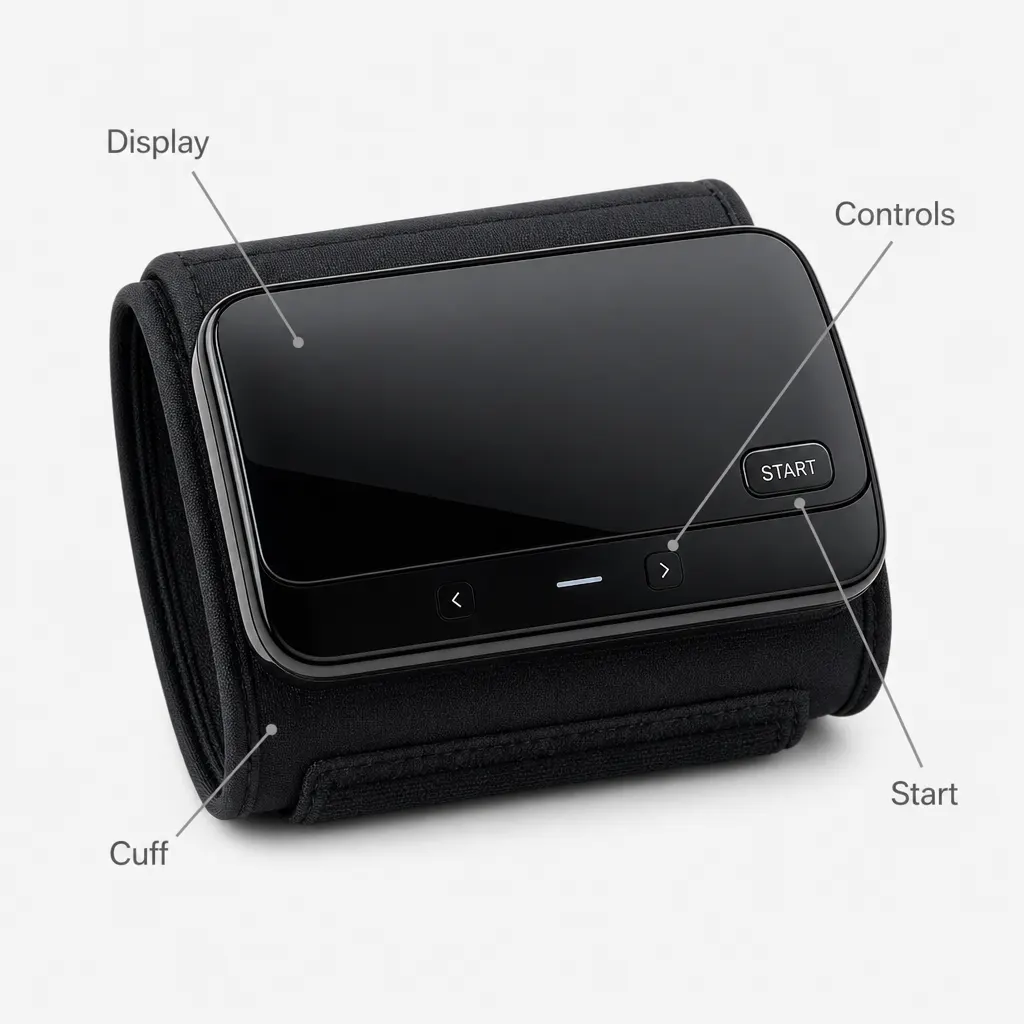
Keep the method consistent at both times
| Diary item | Morning | Evening |
|---|---|---|
| Time | Use the agreed routine | Use the agreed routine |
| Position | Same calm seated method | Same calm seated method |
| Record | Values and context | Values and context |
Record symptoms and context
- Agree the monitoring plan with a clinician.
- Use the same seated upper-arm technique.
- Record each reading with date and time.
- Contact the GP or NHS service if concerned.
Do not treat a diary as a diagnosis
The product listing does not specify a universal morning/evening schedule, diagnostic threshold, clinical validation or treatment recommendation. Emergency symptoms need urgent help, not diary completion.
Use timing to improve the record, not to self-diagnose
The J761 supports a consistent home-reading routine when the plan comes from appropriate NHS or clinical guidance. For related context, see How to Take Blood Pressure at Home with an Upper-Arm Monitor. For related context, see Tubeless Upper-Arm BP Monitor: UK Format and Safety Guide. The documented next step is the J761 upper-arm electronic blood-pressure monitor.
Sources and safety context
Home readings are useful records to discuss with a clinician; they are not a diagnosis. NHS: Blood pressure test.
Use the product page as the final check for the documented model, included items and stated limits before ordering.
Take a grounded next step before starting your diary
Before ordering, write down the unanswered questions that matter to your routine. The first should be the supported cuff circumference for the exact J761. Add any requirement for stored readings, connectivity, multiple users or independent validation, remembering that none of these is confirmed by the supplied facts. If a healthcare professional requested the home record, ask what schedule and equipment criteria they want you to follow. This prevents a compact and apparently simple monitor from becoming the wrong tool for a specific monitoring plan.
If the confirmed cuff fit and required status are suitable, the documented J761 format can be assessed on its clear essentials: it is an upper-arm electronic monitor with an integrated cuff, an on-cuff display, a single Start/Stop control and no separate inflation tube. Set aside a consistent place at home, prepare an external diary and follow the directions for every morning and evening session. Bring or send the resulting record in the format requested by your healthcare professional, and seek professional advice rather than trying to interpret unexpected results from a product description.